The Evolution of Wedding Announcements: How the Floral Wedding Postcard Template Meets Modern Creative Needs
The tradition of announcing a wedding is undergoing a quiet revolution. While digital notifications are instantaneous, there remains a powerful, tactile desire for a tangible keepsake—a physical memento that guests can hold, display, and cherish. This is where the thoughtfully designed Floral Wedding Postcard enters the contemporary scene. It is not merely a graphic template; it is a bridge between traditional sentiment and modern workflow, a tool that answers the evolving demands of today's busy professionals, creators, and couples.
Beyond a Simple Template: Understanding the Floral Wedding Postcard
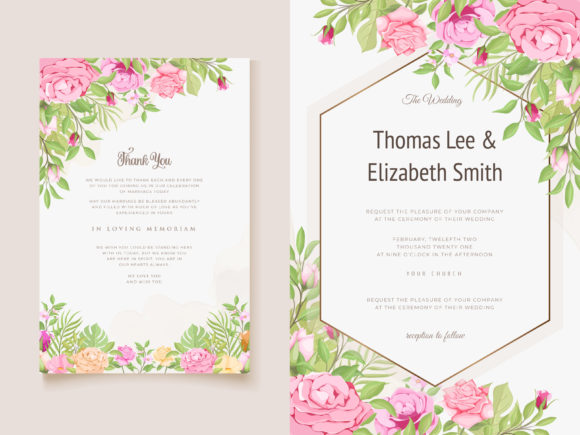
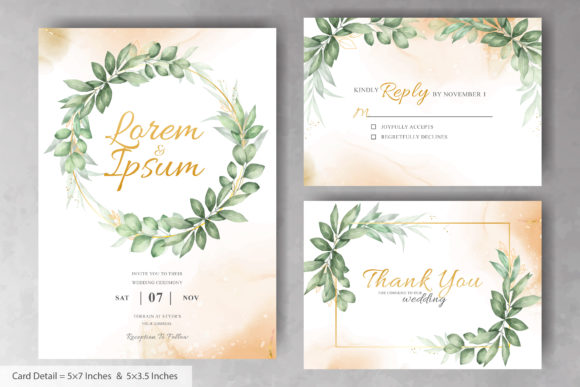
At its core, the Floral Wedding Postcard is a professionally crafted design file, built to the exacting specifications required for high-quality print: CMYK color mode for accurate color reproduction, a 300 DPI resolution for crisp detail, and a precise 6x4 inch size with a 0.25 bleed to ensure perfect trimming. But its true value lies in its architecture. It is a system engineered for efficiency and quality, featuring easily customizable editable text layers, smart object layers for seamless image integration, and a well-organized layer structure. By utilizing free fonts and providing clean PSD files alongside instructional guidance, it transforms from a static design into a dynamic creative asset.
Alignment with Contemporary Creative and Business Trends
The relevance of this product is inextricably linked to larger movements in the creative industry and consumer behavior. We are witnessing a pronounced shift towards professionally amateur outputs—where individuals, entrepreneurs, and small businesses seek tools that allow them to produce work of commercial-grade quality without requiring deep technical expertise in graphic design. The Floral Wedding Postcard template fits perfectly into this trend.
Firstly, it empowers a democratization of design. Freelancers, boutique wedding planners, and even the couples themselves can now produce stunning, print-ready announcements without commissioning a designer from scratch, saving both time and budget. Secondly, it responds to the hybrid physical-digital lifestyle. In an era saturated with digital communication, a beautifully printed postcard carries heightened emotional weight and intentionality. It signifies an event deemed worthy of a physical artifact, aligning with the growing appreciation for curated, tangible experiences amidst digital noise.
The Changing Workflow and Expectations of Modern Creators
The expectations of professionals and enthusiasts have evolved. Speed and flexibility are paramount, but not at the expense of a polished final product. The traditional workflow of designing, proofing, and printing wedding announcements was often linear and time-consuming. The structured yet editable nature of the Floral Wedding Postcard disrupts this. Its smart object layers allow marketers or photographers to swiftly insert client imagery while maintaining design integrity. The organized layers enable rapid iteration—changing colors, text, or layout in minutes rather than hours. This speaks directly to the need for agile creativity, where projects must move quickly from concept to final output without compromising on professional presentation.
Furthermore, the provided specifications (CMYK, 300DPI, bleed) educate and elevate the user. They implicitly guide non-specialists through the critical technical requirements of print design, fostering better outcomes and reducing costly printing errors. This built-in guidance is a subtle but significant feature, reflecting a market trend where software and templates are expected to be not just tools, but also mentors.
Why Attention is Focused on Such Design Assets
People are paying attention to resources like the Floral Wedding Postcard because they solve a multifaceted problem. For the entrepreneur or freelancer, it represents a scalable asset. A wedding planner can use it as a consistent, branded service offering for multiple clients. For the couple, it offers a path to personalization without the overwhelm of blank-canvas design software. The attention is also driven by a broader cultural shift towards customization. Standard, off-the-shelf invitations often feel generic. A template that is “easily customizable” allows for personal touch—infusing the couple’s own photos, tweaking the text tone, perhaps adjusting floral accents—while providing a guaranteed aesthetic foundation. This balance of guidance and freedom is highly sought after.
Practical Applications and Observations
Consider a freelance photographer specializing in weddings. Offering a package that includes not only photography but also a beautifully designed announcement, using this template with the client’s own portraits placed via the smart object layer, creates added value and a cohesive client experience. A small stationery business can use the well-organized PSD files to rapidly produce samples and client proofs, streamlining their production pipeline.
Observations from the market indicate that the demand for such “professional and clean files” is rising precisely because the user base has become more sophisticated. They recognize poor file organization, missing bleeds, or RGB color files as obstacles that lead to frustration and subpar results. Therefore, a product that explicitly addresses these technical hurdles, while delivering a visually elegant floral design—a timeless motif that resonates across styles—meets a clear and present need.
Connecting to Larger Developments in Technology and Commerce
The Floral Wedding Postcard is a microcosm of larger developments in creative technology and e-commerce. It exemplifies the shift from selling finished products to selling enablement. Platforms thrive by providing tools that empower users to create. This template, often delivered with a “Thanks For Purchase” note and a request for a rating, exists within a digital ecosystem where user feedback and community trust are vital. Its existence and optimization rely on the same principles that drive successful software-as-a-service models: solving a specific problem elegantly, ensuring user success through clear instructions (the “instruction.txt help file”), and fostering a cycle of improvement based on user experience.
In a broader sense, it also connects to the resurgence of print as a deliberate medium. In marketing and personal events, print is no longer seen as the default, but as a choice—a strategic or sentimental choice for moments that matter. Providing a tool that makes high-quality print accessible supports this nuanced revival. It aligns with a lifestyle where consumers and professionals are more selective, choosing to blend digital efficiency with physical meaningfulness where it counts most.
Ultimately, the Floral Wedding Postcard template is more than a collection of design files. It is a response to a convergent set of trends: the demand for professional-grade DIY tools, the need for agile and error-free creative workflows, the desire for personalized tangible goods, and the economic realities of small businesses and freelancers. It enables the sending of a beautiful announcement, but its true impact lies in how it elegantly simplifies the complex process behind creating that announcement, allowing the focus to remain on the celebration itself—a forward-looking solution for modern creative needs.